
Pool safety for Airbnb in QLD: certificates and host duties
- 22 October 2026
- Blog
A pool at a Queensland short-stay rental comes with a clear compliance duty: pool safety compliance for an Airbnb in QLD requires... Read More
 by BNB Booking

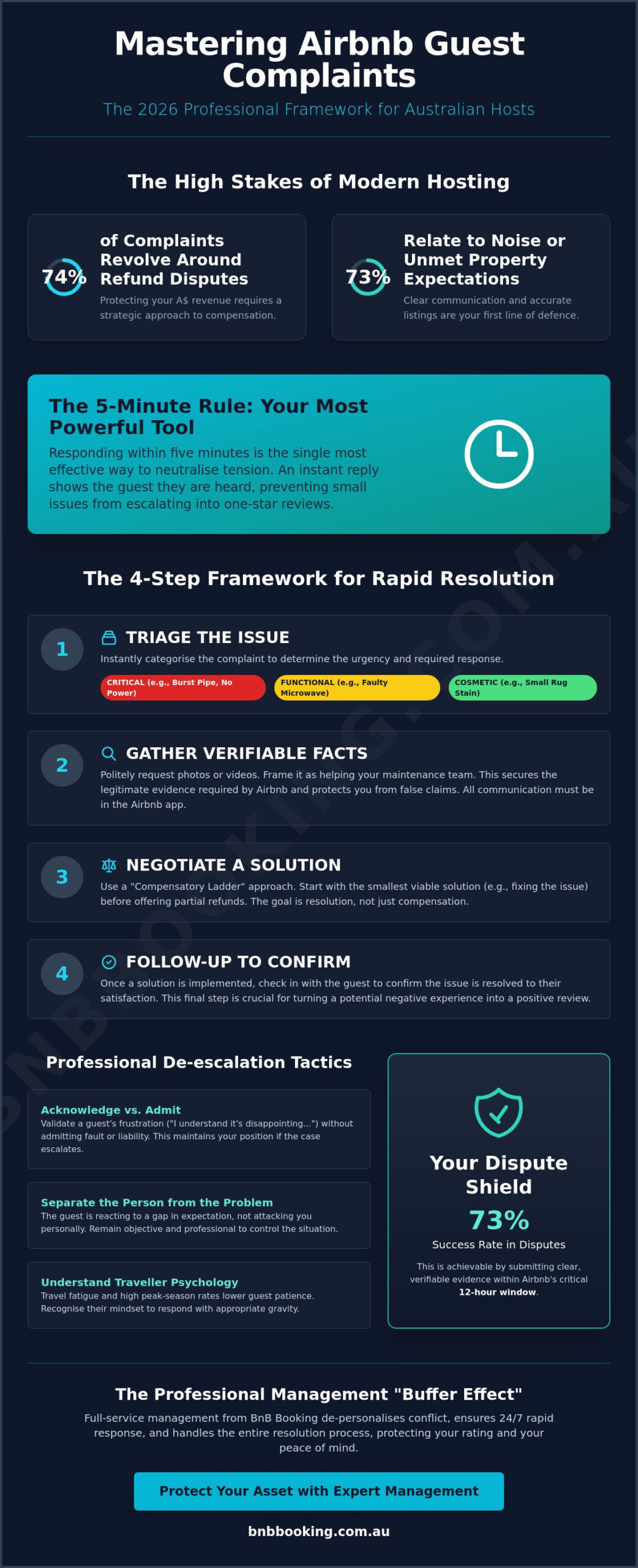
A single notification on your phone at 11:00 PM can trigger an immediate sense of dread, especially when you realise a guest is dissatisfied with their stay. With 74% of complaints now revolving around refund disputes and 73% linked to noise or property expectations, knowing exactly how to handle airbnb guest complaints is no longer just a soft skill; it’s a vital strategy for protecting your A$ revenue. In an era where Airbnb has shifted to a 15.5% host-only fee and enforces strict evidence requirements for damage claims, the margin for error is thinner than ever.
It’s understandable to feel frustrated when a demanding guest interrupts your personal time or threatens the Superhost status you’ve worked so hard to achieve. You’ve likely felt the pressure of managing the day-to-day complexities of hosting while striving to maintain a flawless reputation. This guide from BnB Booking provides a professional framework to master de-escalation and turn potential disasters into five-star outcomes. We will examine the essential 2026 protocols for rapid resolution, including how to utilise the critical 12-hour evidence window to secure a 73% success rate in disputes.
Professional de-escalation in the Australian short-term rental market is the strategic practice of reducing the intensity of a conflict through controlled, empathetic communication. It is less about winning an argument and more about protecting your property’s digital reputation and long-term asset value. When you understand how to handle airbnb guest complaints, you move from a reactive state to a position of business authority. Central to this is a robust complaint management system that prioritises the Five-Minute Rule. Data indicates that responding within minutes prevents a guest from feeling ignored, which is often the primary catalyst for a scathing one-star review. By acknowledging the issue instantly, you stop the emotional momentum of the complaint before it spirals.
It’s easy to feel defensive when someone criticises your investment or your styling choices. However, professional hosts must separate the person from the problem. The guest isn’t attacking your character; they’re reacting to a perceived gap between their expectation and the reality of their stay. You must also master the Acknowledgement vs. Admission distinction. You can validate a guest’s frustration by saying, “I understand how disappointing it is to arrive to a warm fridge,” without admitting that the appliance is faulty or that you are legally liable for a total refund. This distinction preserves your position if the case eventually escalates to Airbnb Support or requires a formal dispute resolution.
Most complaints don’t happen in a vacuum. Travel fatigue, particularly after a long-haul flight into Brisbane or a humid drive during the South East Queensland summer, significantly lowers a guest’s patience. During peak holiday seasons, when nightly rates are at a premium, the perceived value of the stay is incredibly high. If a minor issue occurs, such as a flickering light or a slow Wi-Fi connection, the guest views it through the lens of the high price they paid. Recognising this mental state allows you to respond with the necessary gravity rather than dismissing the concern as trivial.
Your first sixty seconds of communication are vital. Use a punchy, action-oriented template: “I hear your concerns regarding the cooling system, and I’m already contacting our local maintenance team to investigate.” This signals immediate action. While the Airbnb app is the safest channel for record-keeping, a quick phone call can often diffuse a high-tension situation more effectively than text, provided you follow up with a summary in the app. Professional empathy is a calculated tool for reputation management that demonstrates you value the guest’s experience without compromising your business standards.
Success in short-term rentals often hinges on a repeatable system rather than individual intuition. When considering how to handle airbnb guest complaints, you must implement a structured 4-step framework that prioritises speed and objectivity. This begins with triage. By categorising a complaint as Critical, Functional, or Cosmetic, you can allocate resources effectively. Critical issues, such as a burst pipe in a Gold Coast apartment or a total power failure, demand an immediate response. Functional issues like a faulty microwave require a solution within 24 hours. Cosmetic concerns, such as a small stain on a rug, can often be acknowledged immediately but addressed during the next turnover.
Effective triage relies on accurate data. To gather this without appearing sceptical, frame your request for photos as a necessary step for your maintenance team. You might say, “To ensure our Brisbane technician brings the correct tools, could you please send a quick photo of the unit?” This approach secures the legitimate and verifiable evidence required by Airbnb’s 2026 Host Damage Protection Terms. Having a local co-host or a professional management team on the ground allows you to verify noise complaints or Wi-Fi drops in person. This provides a layer of protection that remote hosts lack, ensuring you aren’t issuing refunds for non-existent problems. Always keep this communication within the Airbnb app to maintain your host status protections.
Once the facts are established, move to the “Compensatory Ladder.” This is a tiered approach to resolution based on the Australian “Fair Go” principle, where the solution reflects the actual impact on the guest’s stay. A minor functional issue might warrant a bottle of local wine or a small gift hamper. A critical failure, however, may require a partial refund processed through the Resolution Centre. Always process these payments through the official platform to avoid triggering an accidental booking cancellation.
The final step is often the most overlooked: closing the loop. A “Post-Fix Check-in” message sent roughly two hours after the resolution confirms the guest is truly satisfied. This proactive follow-up often prevents a lingering sense of resentment from surfacing in the final review. It demonstrates that you care about the holistic experience, not just the physical repair. Research indicates that hosts who file disputes with evidence within 12 hours of a complaint have a 73% success rate, so documenting every step of your resolution is your strongest shield.
Operating a short-term rental in Australia involves managing unique environmental and regulatory factors that international guests often find startling. When you master how to handle airbnb guest complaints in a local context, you differentiate yourself from amateur hosts who rely on generic, global templates. In South East Queensland, for instance, the “Brisbane Heat” is a frequent source of friction. If an air-conditioning unit fails during a 35-degree February day, the situation immediately escalates from a functional issue to a critical emergency. Successful hosts maintain a “Local Life” guide within their digital house manual to set expectations about climate and local quirks before the guest even arrives.
Proactive communication is your best defence against climate-related dissatisfaction. Send a message 48 hours before check-in during storm season or extreme heatwaves to advise guests on how to best manage the property’s cooling systems and flyscreens. Always keep backup solutions, such as high-quality portable fans or additional heaters, in a locked owner’s cupboard or a nearby storage facility. This allows you to offer an immediate physical solution while you wait for a technician. Since tradespeople in Australia are notoriously difficult to book on weekends or public holidays, having these stop-gap measures prevents a minor breakdown from becoming a valid reason for a total refund.
Australian wildlife often triggers complaints from international travellers who aren’t used to the heavy thumping of possums on a tin roof or the sight of a huntsman spider. It’s essential to explain that these encounters are a part of the local ecosystem rather than a sign of poor hygiene. A regular, documented pest control schedule is vital here. If a guest complains, you can provide the date of the last professional spray as evidence of your proactive management, which helps satisfy Airbnb’s evidence requirements for dispute resolution.
Noise management is another high-stakes area, particularly with the Gold Coast’s strict party bans and Body Corporate regulations. If a neighbour or building manager reports a disturbance, you must act decisively to protect your hosting permit. Align your house rules with Queensland’s short-term rental laws to ensure you have the legal standing to terminate a stay if guests violate noise limits. By positioning yourself as a responsible member of the local community, you protect your property from heavy council fines and safeguard your long-term asset value under the latest 2026 regulations.
Even with impeccable de-escalation during a stay, some guests remain intent on leaving a negative mark. Understanding how to handle airbnb guest complaints through official channels is your final line of defence in protecting your property’s reputation. The Airbnb Resolution Centre functions much like a digital courtroom. It requires objective proof, a calm demeanour, and a deep understanding of the platform’s 2026 policy updates to secure a favourable outcome for your business.
Timing is the most critical factor when a dispute reaches the Resolution Centre. You typically have a 72-hour window to respond to certain claims before the platform may intervene automatically. As of April 2026, Airbnb’s updated Host Damage Protection terms explicitly ban the use of AI-generated or altered content as evidence. Your documentation must be “Legitimate and Verifiable.” This means providing time-stamped photos, official invoices from local Australian tradespeople, and clear communication logs from within the Airbnb app. To remain the “reasonable party” in the eyes of a mediator, stick to the facts and avoid emotional language. If you can prove a guest’s complaint was retaliatory or violated the review policy, you stand a much better chance of having a one-star rating removed.
When a hostile review goes live, your response is not actually for the person who wrote it. It is a marketing tool for the hundreds of potential guests who will read it before deciding to book your Brisbane or Gold Coast home. Never respond to a review while you are feeling angry or defensive. Wait 24 hours, then draft a reply that highlights your professional standards and commitment to service. For example, if a guest complains about a maintenance issue, your response should focus on the solution: “We were disappointed to hear the air-conditioning failed during your stay. As soon as we were notified, we dispatched a technician who resolved the issue within the hour to ensure the comfort of all future guests.” This tells future travellers that you are a proactive and reliable host.
If the stress of managing these high-stakes disputes is interrupting your personal time or impacting your mental well-being, professional Airbnb management can handle the entire resolution and review process on your behalf, ensuring your asset remains protected without the personal friction.
The most effective strategy for long-term success isn’t just reacting to issues; it’s building a structural barrier against them. While individual hosts often struggle with the emotional and logistical weight of property issues, professional management introduces a “Buffer Effect.” This de-personalises the conflict, allowing a trained agent to resolve disputes with clinical efficiency while you remain the hospitable owner in the guest’s eyes. Knowing how to handle airbnb guest complaints becomes a background process rather than a source of personal stress. By shifting the burden to a professional team, you ensure that every interaction is handled with a level of strategic authority that a solo host simply cannot maintain 24/7.
Our deep-rooted expertise in South East Queensland allows us to anticipate local challenges before they manifest as negative reviews. We understand the specific guest psychology of those booking luxury Brisbane apartments or Gold Coast beachfront homes. When a “midnight call” comes in regarding a power trip or a lockbox issue, our team is already active, resolving the friction while you sleep undisturbed. We maintain professional linen and cleaning standards that mirror five-star hotels, which effectively prevents the 90% of complaints that typically stem from housekeeping oversights. Access to our vetted network of local tradies ensures that even weekend repairs are handled promptly, protecting your asset from further damage and your reputation from “broken amenity” complaints. For Brisbane property owners seeking a more tailored approach, our boutique Airbnb management Brisbane service is specifically designed to maximise premium returns while eliminating the friction of day-to-day guest issues.
The return on investment for professional management is found in the preservation of your night rates and your mental health. High-performing listings in 2026 depend on consistent five-star feedback to stay at the top of search rankings. We’ve seen this first-hand; in one instance, we turned a major plumbing disaster into a repeat booking by managing the guest’s expectations and providing an immediate alternative solution before they even had time to feel frustrated. This level of proactive quality control ensures your property remains a high-yielding asset rather than a part-time job. Let BnB Booking handle your guest communication and complaints. so you can focus on the rewards of ownership without the daily friction of management.
Mastering the professional response to guest issues is the difference between a struggling listing and a high-yield investment. By prioritising the Five-Minute Rule and applying a structured triage framework, you protect your Superhost status from the volatility of the 2026 rental market. You’ve seen that local knowledge of the Queensland climate and strict adherence to Airbnb’s latest evidence protocols are your best defences against unfair claims. Ultimately, understanding how to handle airbnb guest complaints is about transforming a high-stress moment into a demonstration of elite hospitality.
You don’t have to manage the midnight calls or the complex resolution disputes alone. At BnB Booking, we manage luxury portfolios across South East QLD with a dedicated 24/7 guest communication team and vetted local maintenance and cleaning partners. We ensure your property remains a passive income stream rather than a source of personal friction. Enquire about our full-service Airbnb management in Brisbane today.
Your property deserves the highest standard of care; with the right systems in place, every challenge becomes an opportunity for excellence.
You should aim to respond within five minutes to de-escalate the situation effectively. While Airbnb provides a 72-hour window for certain official Resolution Centre responses, immediate acknowledgement prevents the guest from feeling ignored. Rapid communication is the single most important factor in preventing a minor issue from becoming a formal dispute.
No, you shouldn’t automatically issue a refund for every grievance. Instead, use a tiered approach where the compensation matches the actual impact on the guest’s stay. A minor cosmetic issue might only require a small gift like a bottle of local wine, whereas a critical failure like a total loss of hot water justifies a partial refund processed officially through the platform.
You can request the removal of a review if it clearly violates Airbnb’s policy, such as being purely retaliatory or containing irrelevant information. If a guest threatens a negative review to extort a refund, ensure you have documented this threat within the Airbnb app. This evidence is vital for a successful appeal to Airbnb Support.
Act decisively by contacting the guest immediately to stop the noise and protect your hosting permit. With Brisbane’s Short Stay Accommodation Local Law taking effect on July 1, 2026, compliance is critical to avoid heavy council fines. Informing your neighbours that you are a proactive host who uses noise monitoring technology can also prevent complaints from escalating to the authorities.
You must provide time-stamped photos, professional invoices from local tradespeople, and a complete log of all communication within the Airbnb app. As of April 2026, Airbnb prohibits AI-generated evidence, so every photo must be legitimate and verifiable. Keeping a detailed record of how to handle airbnb guest complaints from the very first message ensures you are prepared for a mediator’s review.
Politely refer the guest to the specific section of your listing where the detail was mentioned while acknowledging their current discomfort. You don’t need to admit fault for their oversight, but offering a small, helpful suggestion can often de-escalate their frustration. This approach maintains your professional authority while showing you still care about their experience.
Maintain a rigorous, documented pest control schedule and include a “Local Wildlife” section in your house manual. Explain that encounters with spiders or possums are common in Queensland and don’t indicate a lack of cleanliness. Providing this context before check-in sets realistic expectations for international travellers who may be unfamiliar with our local ecosystem.
Airbnb typically sides with the party that provides the most comprehensive, verifiable evidence within the required timeframes. Research indicates that hosts who file disputes with photo evidence within 12 hours of a complaint have a 73% success rate. Being organised and proactive is the only way to ensure the platform supports your position during a disagreement.