

Strata rules for short term letting in Brisbane: costs and duties
- 21 October 2026
- Blog
Short-term letting doesn’t automatically mean a higher body corporate levy. Under strata rules for short-term letting in Brisbane, contributions... Read More
 by BNB Booking
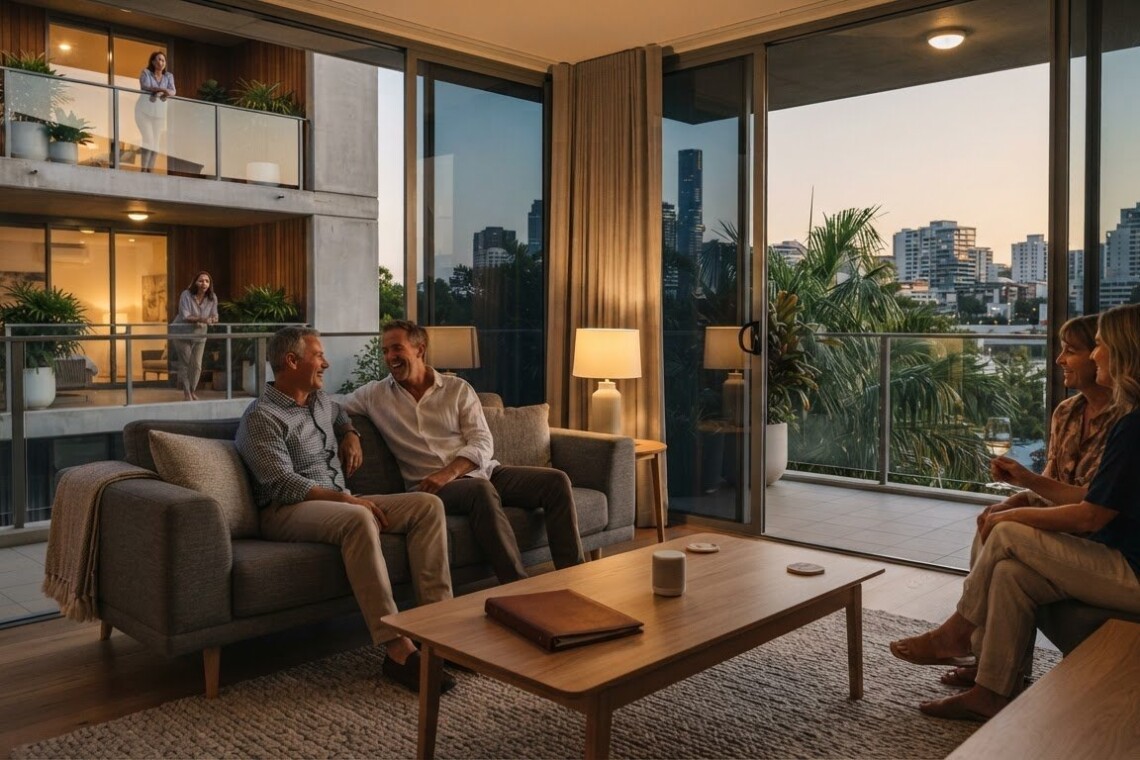
Airbnb’s party ban covers more than open-invitation events. It prohibits disruptive parties and events, including open-invitation gatherings and gatherings that exceed a property’s maximum occupancy. Preventing parties in my Brisbane Airbnb starts with making those limits clear, watching for signs of party plans and responding promptly to concerns.
It’s understandable to want clear boundaries without making every guest feel under suspicion. This guide explains what Airbnb may count as a party, which booking details can indicate risk and what to do if you find evidence that a guest is planning an unauthorised gathering. You’ll also learn how to set practical house rules, communicate with neighbours and respond if a party is already under way. A considered approach sets expectations early and helps protect guests’ and neighbours’ comfort.
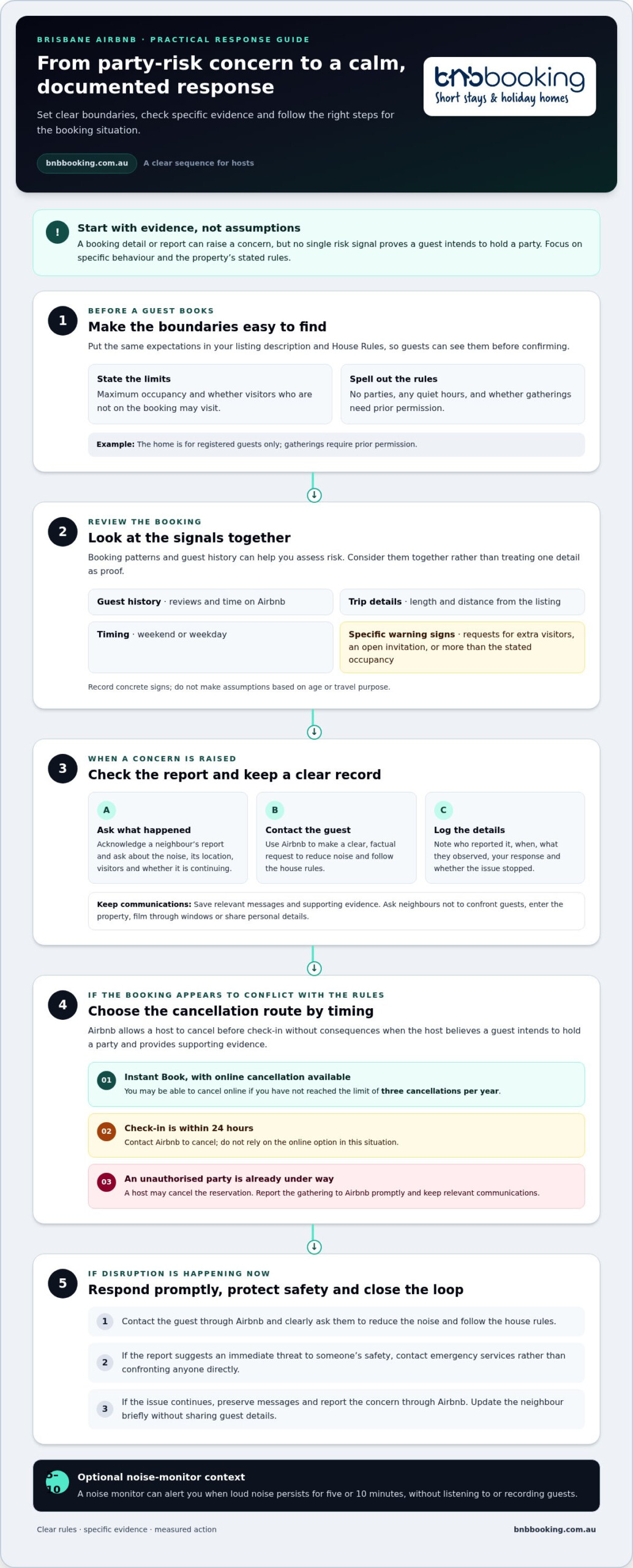
Act on evidence, not assumptions. If messages mention extra visitors, an open invitation or an event that would exceed the property’s capacity, keep those messages and review the booking details. Airbnb allows hosts to cancel before check-in without consequences when they believe a guest intends to hold a party and provide supporting evidence. Preventing parties in my Brisbane Airbnb starts with clear records and a prompt, measured response.
With Instant Book enabled, hosts may be able to cancel online if they have not reached the limit of three cancellations per year. If check-in is within 24 hours, contact Airbnb to cancel. Don’t rely on the online option in that situation. If an unauthorised party is already underway, a host may cancel the reservation; report the gathering to Airbnb promptly and keep relevant communications. Record specific signs, such as a guest asking to exceed the stated occupancy limit, rather than making assumptions based on age or travel purpose.
Make your listing description work before a guest books. State the maximum occupancy, that parties aren’t allowed and whether visitors who aren’t on the booking may visit. For example, say the home is for registered guests only and gatherings require prior permission. Repeat the same expectations in the House Rules so guests see them before confirming. Clear terms help distinguish an ordinary stay from plans that conflict with the property’s rules.
Brisbane City Council’s proposed short-stay permit scheme was paused after the Council announced on 12 May 2026 that the proposed local law would not proceed at that time. Under Brisbane City Plan 2014, short-stay accommodation is treated as tourist accommodation, and some zones may require development approval. For a strata property, read the applicable by-laws and building rules before hosting; don’t assume the listing’s house rules replace them.
There is no Council noise-limit figure or universal quiet-hour time stated here. Set specific quiet hours in your House Rules, and explain that disruptive noise can breach Airbnb’s party policy.
Installation costs for noise monitors, smart locks or exterior cameras depend on the device and installation requirements; the price is given after a quote request. A noise monitor can alert you when loud noise persists for five or 10 minutes, without listening to or recording guests. Use exterior cameras only in ways that respect guest privacy and platform rules.
To reduce booking risk, review guest history, time on Airbnb, trip length, distance from the listing and whether the stay falls on a weekend or weekday. Airbnb may restrict some local entire-home bookings for guests under 25 with negative reviews or fewer than three positive reviews. Guests unable to book an entire home can still choose a hotel room or private room, where a host is more likely to be present.
A neighbour who knows how to reach a responsible contact can report noise before frustration builds. Give nearby residents a current phone number for concerns about your Brisbane rental, and explain whether to call or send a message. Keep the contact details private, share them directly with neighbours and update them whenever the responsible person changes.
If a neighbour reports a suspected party, acknowledge the complaint, ask what they observed and contact the guest through Airbnb. Airbnb may contact the guest or host and may intervene to mediate a noise situation. Keep the conversation factual: record the time, reported noise, visible visitor activity and steps taken. Don’t ask neighbours to confront guests or enter the property.
Respond promptly, but distinguish a noise complaint from immediate danger. Ask the neighbour to describe what is happening, such as loud music, extra visitors or activity outside the home. Contact the guest with a clear request to reduce the noise and follow the house rules. If the report suggests an immediate threat to someone’s safety, contact emergency services rather than attempting a direct confrontation.
Keep a simple log for each complaint. Note who reported it, when the message arrived, what action you took and whether the issue stopped. For example, if a neighbour reports visitors arriving beyond the booking’s stated occupancy, record the observation and ask the guest to clarify. Positive guest reviews don’t replace checking a current complaint against the booking terms.
Tell neighbours what information will help you act. A description of the noise, its location and whether it is continuing is more useful than a general message that the property is “too loud”. Ask them not to film guests through windows or share personal details. This keeps reports focused on the disturbance and helps protect guests’ privacy.
Brisbane’s proposed short-stay permit scheme would have required a 24/7 contact person able to acknowledge complaints within 60 minutes. Brisbane City Council announced on 12 May 2026 that the proposed local law would not proceed at that time, so describe this as a proposed measure, not a current requirement. Still, assigning a reachable local contact gives neighbours a practical route for raising concerns.
After resolving a complaint, send the neighbour a brief update without disclosing guest details. If the issue continues, preserve messages and report the concern through Airbnb. A consistent process helps you respond fairly, identify recurring problems and keep communication clear between guests, neighbours and the person overseeing the rental.
Airbnb’s anti-party system considers several booking signals together: a user’s review history, time on the platform, trip length, distance from the listing, and whether the booking falls on a weekend or weekday. These factors help assess risk, but no single detail proves a guest intends to hold a party. A short weekend booking from a nearby guest with negative reviews may warrant closer attention, but assess the full context before acting.
Review history can provide useful context. Consider whether feedback describes past noise or rule breaches rather than treating few reviews as proof of risk. A new Airbnb user may have little platform history, while a guest with positive reviews still needs to follow your occupancy limit and house rules. Screen consistently and base decisions on relevant booking information.
Trip length and distance also factor into Airbnb’s risk assessment. A brief stay by someone who lives nearby may present a different pattern from a longer booking by a traveller coming from farther away. Consider these details alongside whether the stay is on a weekday or weekend. A weekend alone is not evidence of party plans, but several concerning signals together may justify asking the guest to clarify their intended use of the property.
Noise monitors can detect excessive sound at a rental without listening to or recording guests. Set one to alert when loud noise persists for five or 10 minutes, then use the alert as a prompt to assess the situation. It does not establish who is present or why noise is occurring. Follow up through the booking’s communication channel and compare what you learn with the property rules.
To prevent unauthorised guests and overcrowding, state the maximum occupancy clearly, restrict access to booked guests, and use a noise monitor to flag persistent loud sound. Occupancy-monitoring tools may estimate how many people are inside by checking how many devices connect to the Wi-Fi router. Treat that estimate as an indicator, not a confirmed headcount. A home designed for two people occupied by 10 people presents a higher risk of injury and damage.
Use signals to guide proportionate action, not automatic punishment. If several booking factors raise concern, ask a direct, neutral question about the planned stay and restate the occupancy limit. Save the reply and review it alongside the reservation details. If there is evidence of a party plan, follow Airbnb’s cancellation process. Ignoring clear evidence can lead to disruption, property damage and neighbour complaints.
Choose monitoring that fits the concern. Noise monitoring tracks sound levels over time, while Wi-Fi-based occupancy monitoring estimates device connections. Neither replaces clear rules, careful review of booking details or prompt communication with guests. Used alongside those measures, monitoring can help identify warning signs without treating every weekend reservation or guest with limited platform history as a risk.
Your Airbnb listing should explain who the property suits before a guest books. State the maximum occupancy, whether visitors are allowed and that parties aren’t permitted. These details help guests compare the home with their plans and reduce confusion about who may enter. Keep the information direct, rather than burying it beneath descriptions of the décor or nearby attractions.
Use the same wording across the listing, House Rules and pre-arrival messages. For example: “Maximum occupancy is six registered guests. Parties and unapproved visitors aren’t allowed.” Replace six with the home’s actual limit. Consistent wording makes it easier to refer guests to the relevant term if a booking message mentions extra attendees.
Airbnb’s policy prohibits gatherings that exceed a rental property’s maximum occupancy. Guests planning a gathering are advised to tell the host beforehand and get permission. Don’t imply that a celebration is acceptable simply because the listing describes a spacious dining area or outdoor entertaining space. Explain how those areas may be used, including any restrictions on visitors.
Quiet hours should be specific enough for guests to understand. Set hours that suit the property and communicate them in the listing and House Rules. For example, state when outdoor areas must be quiet and whether music is allowed outside. Don’t present your chosen quiet period as a Brisbane-wide legal rule. A clear house rule tells guests what you expect at this particular property.
Before publishing, check that the listing and House Rules answer these practical questions:
Use plain language for each answer. Reinforce “No parties” with examples such as open invitations, excessive visitors or noise that disturbs neighbours. Avoid vague phrases such as “please be respectful”, which don’t explain what conduct is acceptable. If a guest asks to host a gathering, respond in writing before approving anything, and make sure the agreed plan follows the occupancy limit and property rules.
Review the details whenever the property setup changes. If a room becomes unavailable or a shared facility has new conditions, update the listing and House Rules before accepting another booking. Preview the Airbnb listing to confirm that guests can find the occupancy, visitor and quiet-hour terms before booking. Clear expectations help suitable guests book with confidence and give you a consistent basis for responding to concerns.
Airbnb’s party ban applies to disruptive parties and events, including open-invitation gatherings. It also prohibits gatherings that exceed a property’s maximum occupancy. A gathering doesn’t need to be advertised as a party to raise concerns: excessive noise, rubbish, visitors or parking that affects neighbours can signal a possible breach. The key question is whether the conduct is disruptive or exceeds the home’s stated limits.
Airbnb banned parties at its listings in August 2020, then made the ban permanent at the end of June. Airbnb reported a 44% year-over-year drop in the rate of party reports after the ban’s implementation in August 2020. That change doesn’t mean every gathering is prohibited, but hosts should treat disruptive events and unauthorised visitors seriously. Guests who breach the policy may receive a negative review, have their account suspended or be removed from the platform.
Report an unauthorised party to Airbnb immediately. Use the reservation’s support or reporting options, describe what is happening and preserve relevant messages, guest requests, neighbour reports and noise-monitor alerts. Record when events occurred and what steps you took. Keep evidence factual and relevant. Don’t share private guest information publicly or confront a crowd yourself.
Airbnb considers open invitations, excessive noise, excessive rubbish, too many visitors and parking that affects neighbours among the signs of a party-policy violation. For example, a guest’s message inviting extra people, followed by a neighbour’s report of a large gathering, offers clearer context than a noise alert alone. Compare what you observe with the listing’s occupancy limit and House Rules, then tell Airbnb which rule or policy appears to be involved.
Hosts who allow guests to throw parties may face account consequences, including removal of the listing. Hosts may also be held liable for damage caused by their guests. These are separate concerns: Airbnb’s platform response does not determine how an insurance claim will be handled. Review your policy’s wording on guest-caused damage—or consult AllCover Insurance Brokers to ensure your property is adequately protected against liability risks—and report incidents using your insurer’s required process.
If a gathering is under way, contact the guest through Airbnb and clearly tell them to stop the disruptive activity and follow the house rules. Notify Airbnb promptly, retain the reservation details and document any damage once the property is safe to inspect. Don’t promise neighbours a particular platform outcome. Explain what action you’ve taken and keep a record of further reports.
Clear rules, prompt reporting and organised evidence give you a practical response when conduct appears to breach Airbnb’s policy. If you want support coordinating guest communication and property oversight, explore professional Airbnb management.
BnB Booking’s Full-Service Airbnb Management helps owners coordinate the practical work behind a well-managed short-stay property. It can be a useful next step when guest communication, listing details and property preparation are competing for your attention.
Clear listing information and timely communication help set expectations before guests arrive. BnB Booking’s management includes listing optimisation, guest communication and professional cleaning, helping organise the core work of hosting. Owners remain responsible for setting suitable occupancy limits and property rules, while management supports the day-to-day hosting tasks.
If you’d like support managing your Brisbane Airbnb, contact BnB Booking to discuss Full-Service Airbnb Management.
Reliable hosting comes from deliberate decisions, not last-minute reactions. A thoughtful approach to preventing parties in my Brisbane Airbnb makes responsible hosting part of the guest experience from the first impression. After each stay, consider whether your property setup and communication supported the kind of stay you want to welcome. Small, considered refinements can help keep your standards relevant as your hosting goals evolve.
Think beyond the next reservation. The way you manage a holiday rental affects your time, your property and the experience guests take away. Decide which parts of hosting need your personal attention and where consistent support could make your workload more manageable. That clarity helps you choose a sustainable operating approach instead of making decisions only when an issue arises.
If you’re considering a more supported approach to hosting, explore BnB Booking’s Full-Service Airbnb Management and see how it could fit your plans. A well-considered next step can help you host with greater confidence.
Airbnb’s policy focuses on disruptive events, open-invitation gatherings and gatherings that exceed the property’s maximum occupancy. A quiet dinner within the home’s stated capacity differs from an event that brings unapproved visitors, excessive noise or disruption to neighbours. If guests plan a gathering, they should tell the host and get permission beforehand. The event’s nature, size and effect on neighbours all matter.
Hosts can consider a gathering only if it fits the property’s occupancy limit, has the host’s permission and doesn’t breach Airbnb’s party policy. Host approval doesn’t make a disruptive event or an open-invitation gathering acceptable under Airbnb’s rules. For example, a guest asking to have a small family meal should explain the plan in advance. The host can then respond clearly through Airbnb’s booking messages.
Anti-party technology refers to systems that assess booking patterns or flag signs of possible disruption. Airbnb’s system considers factors such as a guest’s review history, time on the platform, trip length, distance from the property and whether the stay is on a weekend or weekday. Separate noise monitors can track sound levels over time. These tools can inform decisions, but they don’t establish a guest’s intentions by themselves.
No. Booking checks and monitoring tools can help identify warning signs, but they don’t physically prevent guests from gathering. A noise alert, for instance, indicates persistent loud sound, not the number of people or the reason for it. Pair technology with clear access arrangements, direct guest communication and a response plan. If a concern arises, assess the available evidence and act through Airbnb’s booking channels.
Airbnb prohibits disruptive parties and events, including open-invitation gatherings and events exceeding a listing’s maximum occupancy. The platform banned parties at listings in August 2020, then made the ban permanent at the end of June. Guests who breach the policy may receive a negative review, have their accounts suspended or be removed. Hosts who allow parties may also face account consequences, including listing removal.
Write a direct rule, such as: “Parties and events aren’t allowed. Only guests included in the booking may stay, and gatherings require written permission.” Add your property’s actual occupancy limit and quiet-hour expectations. Keep the wording consistent in the listing and House Rules, then refer guests to those terms if they ask about an event. A specific rule is easier to understand than “please be respectful”.
Some noise monitors measure sound intensity over time rather than capturing speech or storing audio recordings. A device can alert a host when loud noise continues for five or 10 minutes, giving them a prompt to assess the situation. This reading doesn’t identify voices, guests or the cause of the noise. Tell guests about any monitor, position it to measure noise appropriately and use alerts as signals, not proof of a party.