
Pool safety for Airbnb in QLD: certificates and host duties
- 22 October 2026
- Blog
A pool at a Queensland short-stay rental comes with a clear compliance duty: pool safety compliance for an Airbnb in QLD requires... Read More
 by BNB Booking
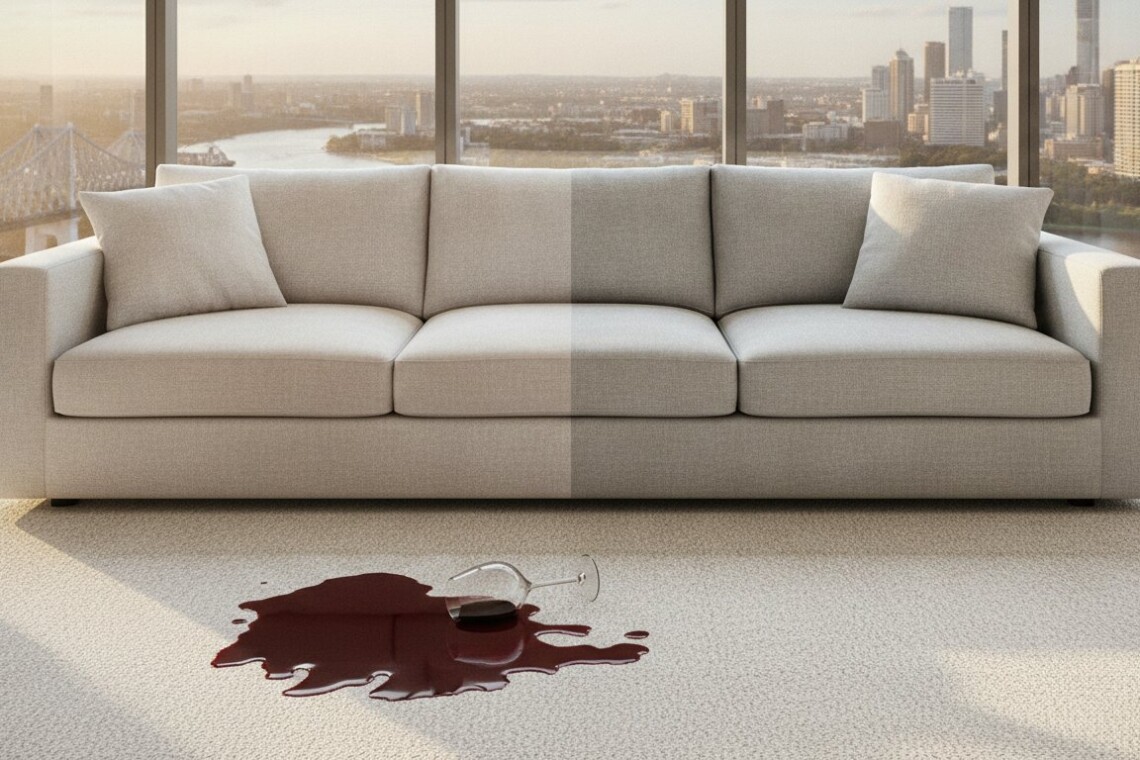
Imagine walking into your Noosa retreat after a busy peak season only to find your “indestructible” linen sofa looking five years older, alongside a fresh red wine stain on the master rug. It’s a gut-wrenching moment that every Australian host eventually faces. You’re likely left wondering if this is simply the cost of doing business or a billable offence. Distinguishing between expected holiday home wear and tear and genuine guest damage is often the most stressful part of professional property management.
We understand the frustration of seeing high-end furniture age prematurely and the anxiety of not knowing if your insurance will actually pay out. This article provides a clear framework to help you protect your investment and maximise your rental yield. You’ll learn the critical differences between aging and accidents, discover practical ways to “host-proof” your home, and gain the confidence to handle guest disputes or insurance claims under current QLD regulations. We will guide you through the transition from being a worried owner to a strategic, high-performing investor who stays ahead of the competitive rental market.
In the Australian short-term rental market, the line between a well-loved home and a damaged one is often blurred. Understanding this boundary is essential for protecting your investment. The standard definition of wear and tear refers to the natural, predictable deterioration of a property that occurs through ordinary, everyday use. As a host, you’re legally responsible for this aging process. However, guest damage is different; it results from negligence, carelessness, or deliberate misuse of your property.
The distinction becomes even more critical when filing claims through platform protections or specialist landlord insurance. Insurers typically categorise damage into two groups: accidental and malicious. Accidental damage might be a child knocking over a vase or a guest dropping a heavy plate. Malicious damage involves intentional harm, such as graffiti or scorched carpets from indoor smoking. Knowing where your situation fits ensures you aren’t left out of pocket for repairs that guests should technically cover.
The “Age and Quality” rule also plays a pivotal role in these disputes. If a ten-year-old carpet is stained, you likely won’t receive the full replacement cost because the item was already nearing the end of its functional life. Depreciation is a reality of holiday home wear and tear that every savvy owner must factor into their financial projections. It’s about being pragmatic about the lifespan of your assets while remaining firm on guest accountability.
Distinguishing between these categories requires a keen eye for detail during post-stay inspections. Consider these frequent scenarios:
Context is everything in the rental industry. What’s “reasonable” for a corporate traveller staying for three nights differs vastly from a large group booking a weekend stay. A property marketed as a high-capacity retreat will inevitably experience a more aggressive holiday home wear and tear profile than a quiet couple’s getaway. Higher guest numbers naturally lead to faster degradation of communal areas and amenities.
To protect yourself, documentation is your best defence. Always ensure you have high-resolution, date-stamped photography of your property before and after every booking. This evidence is the only way to prove that a specific guest caused a gouge or stain, rather than it being a slow accumulation of use over several months. It’s this level of detail that separates professional hosts from those who lose their profits to preventable repairs.
A holiday rental is not a standard residential property; it is a high-performance asset subject to intense operational pressure. While a long-term tenant might wash their sheets once a week, a holiday home sees linens laundered professionally every few days. This “cleaning tax” significantly shortens the lifespan of high-thread-count sheets and plush towels through chemical exposure and high-heat drying. Similarly, the “suitcase effect” is a uniquely short-term rental phenomenon. Frequent arrivals and departures mean heavy, hard-edged luggage constantly knocks against skirting boards and door frames. This leads to an accelerated holiday home wear and tear profile that traditional rentals rarely experience.
In South East Queensland, the environment acts as a silent catalyst for property aging. Salt air on the Gold Coast and Sunshine Coast corrodes outdoor furniture frames and air conditioning condensers at an alarming rate. Humidity encourages mould in soft furnishings if not managed with clinical precision. Appliances also suffer from fatigue. Guests often overload dishwashers or run air conditioning units on “arctic” settings with balcony doors wide open. This heavy-duty usage means your capital assets may require replacement years earlier than the manufacturer’s domestic estimates.
Properties on the Gold Coast and Sunshine Coast face a constant battle with sand and pool chemicals. Sand acts like sandpaper on floor finishes, while chlorine-soaked swimwear can ruin expensive upholstery. Conversely, Brisbane CBD apartments deal with a different beast: high-frequency corporate turnover. Constant use of electronic entry systems and lifts increases the chance of mechanical failures. Adhering to Fair Trading guidelines on wear and tear is a helpful starting point, but these standards often fail to account for the sheer velocity of holiday guest cycles.
The greatest risk to your rental yield isn’t a single catastrophic event. Instead, it is “cumulative decay.” Small, unaddressed issues like a loose cupboard hinge or a flickering LED bulb signal to guests that the property is not premium, which often leads to less careful behaviour. Regular deep cleans are the primary tool for identifying these hidden points of holiday home wear and tear. By establishing a realistic depreciation schedule, you can plan for replacements before they fail during a peak booking period. Engaging a full-service Airbnb management team ensures these minor details are caught after every stay, preventing small scuffs from turning into major repair bills.
Styling a short-term rental requires a shift from purely aesthetic choices toward a focus on operational durability. Domestic furniture often fails under the pressure of high turnover. Commercial-grade pieces are engineered for high-traffic environments. Choosing performance materials doesn’t mean sacrificing a luxury feel. It simply means selecting items that maintain their integrity over time. This proactive approach significantly reduces the visible holiday home wear and tear that can lead to negative guest reviews. Strategic colour choices are also vital. Solid dark or very light fabrics show every speck of lint or minor spill. Instead, opt for heathered textures or subtle patterns in mid-tones like oatmeal or charcoal to mask inevitable traffic marks.
Modular furniture is a game-changer for the modern host. If a guest spills wine on a standard sofa, the entire piece may be ruined. With modular designs and replaceable slipcovers, you can simply launder or replace a single section. This keeps your living area looking fresh without the capital expense of frequent full replacements. It’s a pragmatic way to maintain a premium standard while accepting the realities of guest use.
While solid timber is a classic choice, it’s often too fragile for the constant movement of suitcases and high heels. High-quality luxury vinyl planks (LVP) offer the same visual appeal with far superior scratch and water resistance. It’s helpful to align your choices with Queensland’s take on fair wear and tear, which notes that owners are responsible for basic carpet aging. You can mitigate this by using the “Rug Strategy.” Place durable, low-pile rugs in high-traffic zones to protect the primary floor covering. For upholstery, solution-dyed acrylics are the gold standard. They are bleach-cleanable and UV-resistant, making them perfect for sunny SE QLD living rooms.
Kitchen surfaces bear the brunt of guest mishaps. Engineered stone is highly durable but can be prone to chipping if hit by heavy pots. High-pressure laminates have come a long way and often survive impact better than some natural stones. In bathrooms, avoid designer tapware with thin, trendy finishes. Opt for solid brass or brushed stainless steel hardware that won’t loosen or pit over time. Keeping a “Spares Kit” on-site is a clever move. Include matching cabinet handles, light globes, and even a few spare floor planks. This ensures your maintenance team can fix minor holiday home wear and tear instantly between bookings, keeping the property in top-tier condition.
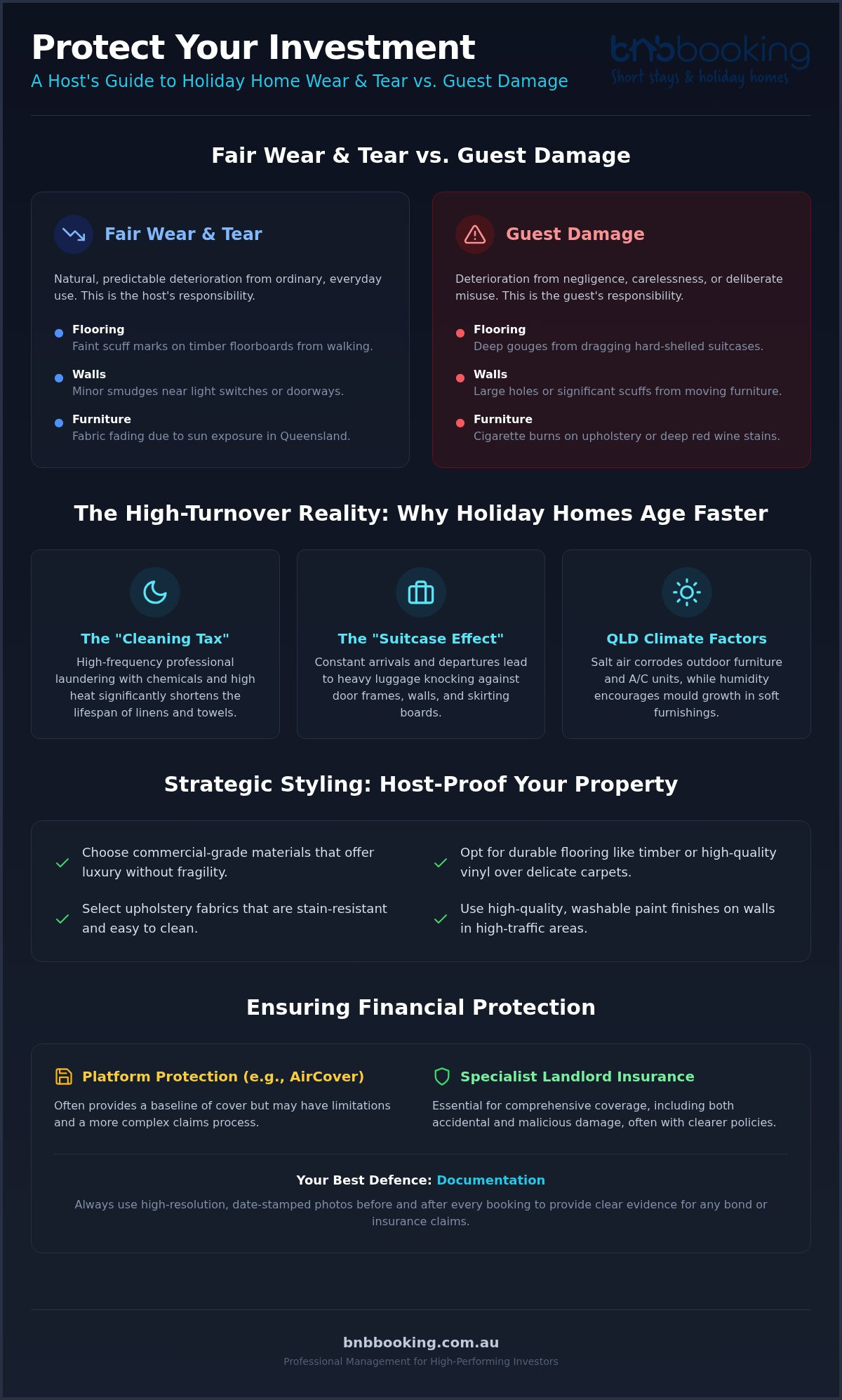
Asset protection is the bedrock of a successful rental business. Relying solely on platform-provided protection like AirCover is a common mistake that leaves many owners exposed. While AirCover offers a useful safety net, it often has significant gaps regarding gradual holiday home wear and tear and specific liability concerns. Specialist short-term rental insurance is non-negotiable. With median annual premiums for combined home and contents insurance in Australia reaching approximately $2,471 as of June 2026, choosing a policy that specifically covers guest-related damage and loss of rent is a vital strategic move. Insurance costs have risen 46.4% between 2021 and 2025, making professional risk management more important than ever.
Writing a successful damage claim requires more than just a photo of a broken chair. You need a comprehensive paper trail that includes the original purchase receipt, the pre-stay condition report, and a professional quote for repair or replacement. In 2026, security bonds remain a vital deterrent for guests, provided they are managed according to the latest QLD-specific rental regulations. A well-documented claim, backed by professional oversight, is far more likely to be paid out without lengthy disputes.
The “24-hour rule” is the most important standard for reporting damage. If you fail to notify the platform or the guest within this window, your chances of a successful claim drop significantly. Professional cleaning reports serve as objective, third-party evidence that holds weight in disputes. Always maintain a professional, non-confrontational tone. This approach protects your reputation and minimises the risk of retaliatory reviews. If you want to ensure your property is professionally monitored after every checkout, consider partnering with full-service Airbnb management experts to handle these delicate negotiations on your behalf.
As of 1 July 2026, the ATO’s Taxation Ruling TR 2026/1 introduces a strict “main use” test for holiday homes. To claim ownership expenses like interest and insurance, you must prove the property is held mainly to produce income. Distinguishing between a “repair” and an “improvement” is essential for your tax return. A repair restores an item to its original condition and is usually deductible immediately. An improvement adds value or extends the life of an asset and must be depreciated over time. Keeping a precise digital log of all maintenance is vital for meeting ATO scrutiny. Always consult with a specialist QLD property accountant to ensure your depreciation schedule is optimised for your specific investment goals.
Effective management is the final, most robust line of defence against the inevitable pressures of the rental market. Managing holiday home wear and tear is not a passive activity; it requires a proactive strategy that begins long before a guest arrives. At BnB Booking, our approach centres on high-level guest vetting. We don’t simply focus on occupancy rates. We prioritise the quality of the guest. By utilising a rigorous screening process, we minimise the risk of malicious damage and ensure that your property is occupied by individuals who value a luxury environment. This strategic oversight creates a self-sustaining cycle where respectful guests naturally treat the home with greater care.
The “Eyes-on-Property” advantage is another cornerstone of our service. While an individual host might only visit their property occasionally, our professional cleaning teams provide a detailed report after every single checkout. This allows us to catch minor issues, such as a stiff lock or a small carpet snag, before they escalate into expensive repairs. Our established network of trusted SE QLD tradespeople ensures that maintenance is coordinated with clinical efficiency. Whether it’s a quick fix in Brisbane or an urgent repair on the Gold Coast, we handle the logistics so that your asset remains in peak condition for the next arrival.
Our framework is designed to preserve the physical integrity of your investment through structured oversight. We conduct regular property audits that go beyond surface-level aesthetics to check the functional health of your home. This includes preventative maintenance schedules for high-use items like air conditioning systems and kitchen appliances. To combat the “cleaning tax” on textiles, we utilise professional linen services that meet hotel standards. This preserves the life of your towels and sheets far longer than domestic laundering. This holistic management style ensures that emergency repairs are rare and that the property always meets the high expectations of the luxury market.
Consistent, high-quality upkeep is not merely a business cost; it is a tool for increasing your rental yield. A property that shows no signs of holiday home wear and tear justifies a significantly higher nightly rate and attracts a more affluent demographic. Beyond immediate cash flow, professional management protects the long-term resale value of your investment. By maintaining the property to a global standard of excellence, you ensure that the building and its contents depreciate far slower than unmanaged rentals. This commitment to quality transforms your holiday home from a simple rental into a high-performing capital asset. If you are ready to secure your investment’s future, enquire about our full-service management to protect your home and maximise your long-term returns.
Managing a premium rental in South East Queensland requires more than just high occupancy; it demands a rigorous approach to asset preservation. By clearly distinguishing between guest damage and natural holiday home wear and tear, you position yourself to defend your rental yield and maintain a pristine environment. Success lies in the details, from selecting commercial-grade performance fabrics to implementing a strict “eyes-on-property” inspection regime after every checkout. These proactive steps ensure your investment remains a top-tier contender in a competitive market.
You don’t have to navigate these operational complexities alone. With over 10 years of experience in SE QLD property management, BnB Booking provides the specialised luxury property care your investment deserves. Our comprehensive guest vetting and 24/7 support ensure your home remains a high-performing asset while you enjoy the rewards of a truly passive income. It’s time to move beyond reactive repairs and embrace a strategic, holistic management model that prioritises long-term capital value.
Protect your investment with BnB Booking’s expert management and ensure your property continues to set the standard for luxury in the Australian market. We look forward to helping you reach your investment goals with confidence and ease.
A scratched floorboard is typically considered wear and tear if the marks are light surface scuffs from regular foot traffic. However, deep gouges or significant scratches caused by dragging heavy furniture or hard-shelled suitcases are classified as damage. The distinction relies on whether the harm resulted from “reasonable use.” If the scratch penetrates the protective finish, you likely have a valid claim against the guest’s bond or insurance.
No, Airbnb AirCover does not pay for normal holiday home wear and tear. This protection plan is designed to cover accidental or malicious damage caused by guests during a specific booking period. It explicitly excludes gradual deterioration, such as fading upholstery or worn carpets. Hosts must factor these recurring maintenance costs into their nightly rates, as platform protection won’t reimburse you for the natural aging of your investment property.
In a high-turnover holiday rental, you should plan to replace carpets every five to seven years. While domestic carpets often last over a decade, the intense cleaning cycles and heavy suitcase traffic in a rental accelerate degradation. Using professional-grade, low-pile options can extend this window significantly. Monitoring the “cumulative decay” through regular audits helps you schedule replacements before the property’s luxury appeal begins to diminish in guest reviews.
You can claim professional cleaning costs if a guest leaves the property in a state that requires effort beyond a standard turnover clean. This includes scenarios like excessive rubbish, deep stains on upholstery, or biological hazards. To succeed in a claim, you must provide “before and after” photos alongside an itemised invoice from your cleaning service that clearly specifies the additional labour and specialised chemicals required to restore the home.
The most effective way to document property condition is through high-resolution, date-stamped photography taken immediately before every guest arrival. Focus on high-risk areas like kitchen benchtops, flooring, and expensive electronics. Pair these images with a comprehensive digital inventory list. This creates an indisputable evidence trail, making it significantly easier to prove that specific holiday home wear and tear was actually guest-inflicted damage during a formal dispute.
Yes, Queensland has specific regulations regarding security bonds and guest liability for short-term rentals. Unlike long-term residential tenancies governed by the RTA, holiday rentals often operate under different contractual frameworks. In 2026, it’s vital to ensure your guest agreements comply with the latest state-wide rules for bond collection and dispute resolution. Professional management ensures your property stays compliant with these evolving legal standards while protecting your financial interests during the claims process.
If a guest refuses to pay for accidental damage, you should immediately escalate the matter through the platform’s resolution centre or your specialist landlord insurance provider. Provide your full evidence trail, including the pre-stay condition report and repair quotes. Maintaining a professional, non-confrontational tone is essential during this mediation. If the platform’s resolution process fails, your private insurance policy acts as the final safety net to recover your repair costs.
Yes, full-service Airbnb management includes comprehensive maintenance coordination as a core feature. This service encompasses everything from vetting local SE QLD tradespeople to scheduling regular preventative audits. Managers act as your “eyes-on-property,” catching minor issues before they escalate into major repair bills. This proactive approach ensures your luxury home maintains its high standards, attracting respectful guests and protecting the long-term resale value of your property through consistent, professional upkeep.