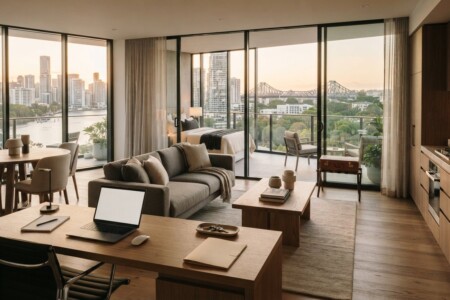

Setting Up a Corporate Executive Rental: Furnishings and Lease Terms
- 24 October 2026
- Blog
A furnished executive rental can be a more practical fit than a hotel when a work assignment lasts beyond a few nights.... Read More
 by BNB Booking

What if your Brisbane investment property could generate 50% more gross income while giving you the freedom to stay there yourself? With interest rates squeezing margins across South East Queensland, many owners are now seriously considering switching from long term to short term rental brisbane to reclaim their cash flow. It’s a strategic move that transforms a passive asset into a high-performing hospitality business, but it requires more than just a fresh coat of paint and a digital listing.
You’ve likely heard the whispers about complex council crackdowns or the fear of unruly guests, and it’s natural to feel cautious about changing your strategy. Fortunately, with the shelving of the proposed permit system in mid-2026, Brisbane remains one of Australia’s most permissive markets for savvy hosts. This 2026 transition guide provides the clarity you need to navigate “Transitory Accommodation” council rates and the upcoming smoke alarm deadlines with confidence. We’ll show you how to professionalise your property oversight to maximise yields while ensuring your asset remains protected by hotel-standard care.
Brisbane’s rental landscape is undergoing a significant transformation. While the long-term vacancy rate remains incredibly tight at 0.9% as of July 2026, many property owners find themselves at a crossroads. Traditional 4-5% yields are struggling to outpace rising holding costs; this leads savvy investors to explore the global short-term rental market as a more lucrative alternative. By switching from long term to short term rental brisbane, you move away from the “set and forget” mentality toward a dynamic business model that responds to real-time demand.
Suburbs like the CBD, Fortitude Valley, and West End have emerged as the “sweet spot” for this transition. These areas benefit from a constant influx of visitors, whether they are here for the annual spectacle of Riverfire or the ongoing infrastructure developments leading up to the Brisbane 2032 Games. This “halo effect” from major events allows owners to capitalise on high-demand windows that a standard lease simply cannot capture.
Traditional 12-month leases often fail to keep up with inflation because they lock in a price for a full year. In contrast, the short-term market allows you to adjust rates nightly, capturing the full value of peak periods and seasonal surges. There is also a significant lifestyle benefit to consider. You gain the flexibility to block out dates for your own use, turning your investment into a personal holiday home whenever you please. Corporate travellers are also a major factor in this shift. They drive consistent mid-week occupancy that balances out the weekend leisure crowd, ensuring your asset works hard seven days a week. If you are interested in acquiring a high-end property to add to your portfolio, you can discover Zed Real Estate for luxury real estate opportunities across Australia.
The rise of “bleisure” travellers, professionals who extend business trips for leisure, is reshaping South East Queensland. These guests look for high-end apartments that offer both a functional workspace and a touch of luxury. With the Brisbane City Council shelving restrictive permit laws in May 2026, the regulatory environment is now one of the most favourable in the country. This permissive stance, combined with a 2026 local economy bolstered by pre-Olympic construction, creates a perfect storm for short-term pricing growth. Premium Brisbane listings managed with professional oversight currently maintain an average occupancy rate of approximately 74% across the calendar year.
While the regulatory environment in Brisbane is currently one of the most welcoming for investors, it’s not a landscape without specific financial obligations. In May 2026, the Brisbane City Council officially shelved the Brisbane’s short-stay accommodation laws that would have required a formal permit. This decision makes the city a permissive hub for short-term rentals compared to the restrictive caps found in Sydney or Melbourne. However, successfully switching from long term to short term rental brisbane requires a precise understanding of your tax and safety liabilities to avoid heavy-handed penalties.
The most significant regulatory hurdle isn’t a permit, but your rates notice. Brisbane City Council applies a “Transitory Accommodation” rating to properties used primarily for short-term stays. This category effectively acts as a surcharge to account for the increased use of local infrastructure. For the 2026-2027 financial year, the rates are calculated as follows:
This is roughly 2.3 times the standard owner-occupied rate. Failing to notify the council of your change in usage can result in backdated charges and significant fines. It’s vital to update your property’s status as soon as the first guest checks in to remain compliant.
Queensland legislation is particularly strict regarding fire safety. All rental properties must have interconnected photoelectric smoke alarms installed before the January 1, 2027, deadline. Additionally, the Queensland Code of Conduct for the Short-Term Rental Industry mandates that hosts maintain a guest register and provide a 24/7 contact point for neighbours to report issues. Managing these logistics while ensuring your property meets the Brisbane City Plan 2014 zoning rules can be overwhelming for solo investors. Engaging a professional management partner can ensure these compliance boxes are ticked before you even list the property.
For those owning units or townhouses, the Body Corporate remains a powerful gatekeeper. Despite the council’s permissive stance, individual strata by-laws can still legally restrict or even prohibit short-term letting within a building. Before making the switch, you must review your specific scheme’s by-laws. Positive neighbour relations are your best defence against complaints; implementing strict guest vetting and noise monitoring technology can prevent the friction that leads to Body Corporate intervention. If your by-laws are silent on the matter, you generally have the right to proceed, but proactive communication with the committee is always the smarter strategic move.
Transitioning to a holiday rental model requires a shift from calculating monthly rent to managing nightly yields. In early 2026, the median weekly rent for a Brisbane unit sat at $660; this provides a stable but often capped return of 4-5%. By switching from long term to short term rental brisbane, you unlock the potential for significantly higher gross revenue, often outperforming traditional leases by 30% to 50%. However, this uplift comes with a more complex expense profile. While the Brisbane City Council regulations were recently clarified with the shelving of the proposed permit law, owners must still account for the “Transitory Accommodation” rate surcharge, which is roughly 2.3 times the standard residential rate.
You must also consider “The Big Three” operational costs: professional management, cleaning, and utilities. Unlike a long-term tenancy where the tenant pays for electricity and water, these costs fall entirely on the owner in a short-term model. There are also “hidden” setup costs to navigate. Investing in professional photography and high-end styling creates a digital front door that commands a premium over the sea of generic listings. It’s also vital to consult with a tax professional regarding Capital Gains Tax (CGT). Changing a property’s use from a primary residence to an income-producing short-term rental can impact your “main residence” exemption and the ATO’s six-year rule.
Success in the Brisbane market relies on high rankings, and nothing drives visibility like five-star reviews for cleanliness. Professional cleaning and commercial-grade linen services are non-negotiable expenses; they ensure the “hotel-standard” finish that modern travellers expect. You should also budget for accelerated wear and tear. Frequent guest turnover means more scuffs on walls and a higher consumption of “consumables” like coffee pods, soaps, and boutique toiletries. To offset these costs, dynamic pricing software is essential. This technology automatically adjusts your nightly rate based on local demand, such as the surge in visitors during Riverfire or major sporting events at Suncorp Stadium, ensuring you never leave money on the table.
To understand the true value of the switch, consider this hypothetical comparison for a 2-bedroom apartment in South Brisbane:
For most Brisbane investors, a short-term property typically reaches a financial break-even point compared to a long-term lease at approximately 55% to 60% occupancy.
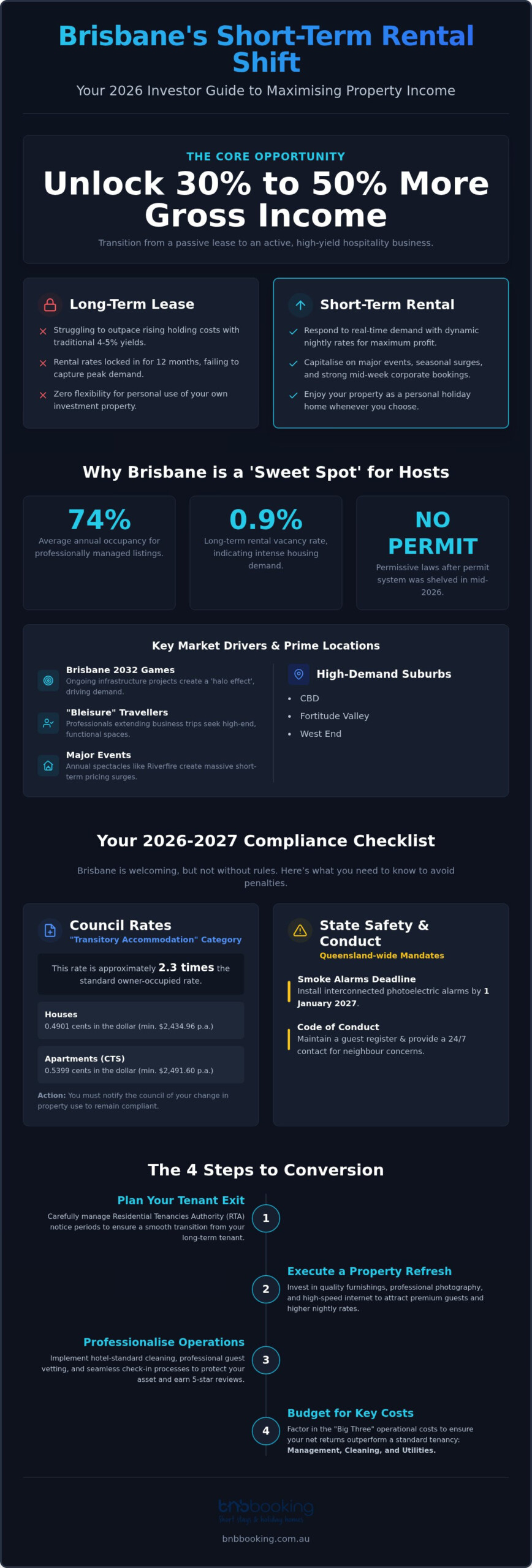
Transitioning your asset from a standard lease to a high-yield holiday rental is a structured process that begins with the Residential Tenancies Authority (RTA). Successfully switching from long term to short term rental brisbane requires careful timing of your current tenant’s departure. You must issue a “Notice to Leave” (Form 12) at least two months before the end of a fixed-term agreement, or negotiate a mutual termination if the lease is periodic. Once the property is vacant, the focus shifts from “tenant-proof” durability to “guest-ready” luxury. If you are also managing properties in other states and need to store furniture during a similar transition, you can explore Self-storage unit rentals to keep your assets secure. A comprehensive refresh, including neutral paint touch-ups and a professional deep clean, provides the essential canvas for your new hospitality venture.
Standard landlord insurance rarely covers short-stay activities. You must pivot to a specialised STRA insurance policy that protects against accidental damage, theft by guests, and public liability specific to short-term stays. Digital infrastructure is equally critical. Installing keyless entry systems allows for seamless, contactless check-ins, while noise monitoring technology provides real-time alerts to prevent party-related disturbances. Ensure your emergency floor plans and guest safety manuals are updated and visible to comply with the Queensland Code of Conduct. If the technical setup feels daunting, our team at BnB Booking can manage the entire digital and safety integration for you.
Furnishing for hospitality is an exercise in balancing aesthetics with resilience. In Brisbane, two dominant styling trends perform exceptionally well: the “Coastal-luxe” look for suburbs like West End and New Farm, and “Industrial-urban” for CBD and Fortitude Valley apartments. Your inventory must include the “Big Six” essentials to secure high guest ratings: premium mattresses, hotel-grade linens, a fully equipped kitchen, a dedicated coffee station, high-speed Wi-Fi with a Smart TV, and durable outdoor furniture to capitalise on the Queensland climate. Professional photography is the final, most vital step. These images act as your digital storefront; they must highlight lifestyle features like city views or alfresco dining areas to stop the scroll on booking platforms.
While the financial upside of switching from long term to short term rental brisbane is compelling, the operational reality can be a shock to those used to the “set and forget” nature of a monthly bank transfer. Self-managing a holiday rental isn’t a hobby; it’s a high-stakes hospitality role that demands 24/7 responsiveness. Between answering guest enquiries at midnight and coordinating same-day cleaning turnarounds, many solo investors find their margins eroded by the sheer cost of their own time. Professional management transforms this burden into a scalable, truly passive investment that works for you.
At BnB Booking, we focus on protecting your asset through rigorous guest vetting and hotel-standard oversight. We don’t just list your property; we manage its reputation. By utilising a multi-channel approach, including Airbnb, Stayz, and our own high-performing direct booking platform, we ensure your property captures maximum visibility without a total reliance on third-party commissions. Our maintenance coordination team works behind the scenes to keep your apartment in “as-new” condition, proactively addressing minor repairs before they impact a guest’s experience or your review score.
Our boutique approach is rooted in a deep understanding of Brisbane’s specific sub-regions, from the corporate pulse of the CBD to the lifestyle appeal of South Brisbane. We operate with a “Guest-First” philosophy, knowing that five-star reviews are the primary currency of the short-term market. This dedication to excellence drives repeat bookings and maintains high occupancy rates throughout the year. You stay completely in control with transparent reporting and real-time financial data, ensuring you see the tangible results of your asset’s performance without the daily stress of oversight.
The transition from a standard lease doesn’t have to be a slow or complicated burn. Our streamlined onboarding process is designed to get your property live and generating revenue in under 14 days. We begin with a comprehensive rental appraisal to benchmark your property against current 2026 market data, identifying the specific styling or amenity upgrades that will drive your nightly rate. Contact BnB Booking today for a tailored short-term rental strategy and discover how our end-to-end management can turn your Brisbane investment into a high-yield hospitality success.
The shift from a standard tenancy to the high-yield holiday rental market is more than just a change in listing platform; it’s a strategic move toward a hospitality-led business model. By understanding the 2026 regulatory landscape and the permissive stance of the Brisbane City Council, you’ve already cleared the first hurdle. Successfully switching from long term to short term rental brisbane allows you to reclaim your cash flow and gain the flexibility to use your asset personally, provided you manage the transition with professional precision.
With over 10 years of South East Queensland management expertise, BnB Booking is specialised in elevating luxury and pet-friendly stays to achieve peak occupancy. Our professional cleaning and maintenance teams ensure your investment remains in hotel-standard condition, while our strategic guest vetting protects your peace of mind. Don’t leave your returns to chance in a competitive market. Request a Free Brisbane Rental Yield Appraisal today to see exactly how your property can outperform a traditional lease. Your journey toward a high-performance investment starts with a single, expert conversation.
No, you don’t need a specific permit or license to operate a short-term rental in Brisbane as of mid-2026. The Brisbane City Council officially shelved the proposed permit system in May 2026, making the city one of the most permissive capitals for hosts. However, you must still ensure your property use complies with the Brisbane City Plan 2014 and pay the “Transitory Accommodation” council rates, which are higher than standard residential rates.
Many investors see a 30% to 50% increase in gross rental income when switching from long term to short term rental brisbane. While long-term yields typically hover between 4% and 5%, the ability to capitalise on premium nightly rates during peak events like Riverfire or the Brisbane 2032 lead-up significantly boosts returns. Most properties reach a financial break-even point compared to a standard lease at approximately 55% to 60% occupancy.
Short-term rentals involve more frequent guest turnover, which can lead to higher use of consumables and minor surface scuffs. However, the “hotel-standard” cleaning required between every stay means your property is inspected and maintained far more often than a standard long-term rental. Professional management ensures that any maintenance issues are identified and repaired immediately, often keeping the asset in better condition than a tenant-occupied home over the long run.
You need specialised Short-Term Rental Accommodation (STRA) insurance rather than a standard landlord policy. This coverage is essential in Queensland to protect against specific risks like accidental guest damage, theft, and high-limit public liability. It’s also important to ensure your policy covers loss of rent due to insured events, as holiday rental income can be more volatile than the fixed returns of a standard 12-month lease agreement.
Yes, a body corporate can legally enforce by-laws that restrict or prohibit short-term letting within a strata-titled building. Even though the Brisbane City Council is permissive, the specific rules of your scheme take precedence. Before making the switch, it is vital to review your by-laws and engage with the committee to ensure you aren’t in breach of any local building regulations or noise protocols that could lead to fines.
Managing a property from afar is best handled through a full-service management partner like BnB Booking. We coordinate professional cleaning teams and linen services to ensure the property is guest-ready after every checkout. For handovers, we implement digital infrastructure like keyless smart locks, which allow for secure, contactless entry. This removes the logistical headache for owners while providing a seamless, professional check-in experience for your guests at any hour.
The CBD, Fortitude Valley, and West End remain the top-performing suburbs for Brisbane investors in 2026. These areas attract a high volume of corporate “bleisure” travellers and event-goers, ensuring consistent mid-week and weekend occupancy. Nearby hubs like South Brisbane also perform exceptionally well due to their proximity to the cultural precinct and major infrastructure projects currently under construction for the upcoming Olympic Games, driving strong nightly rates.
There is currently no mandated minimum stay requirement set by the Brisbane City Council for short-term accommodation. Most hosts choose to set their own minimums, such as two or three nights, to balance cleaning costs with occupancy rates. During high-demand periods or major local events, increasing your minimum stay can be a strategic way to maximise revenue and reduce the logistical strain of frequent guest turnovers during peak seasons.