
Pool safety for Airbnb in QLD: certificates and host duties
- 22 October 2026
- Blog
A pool at a Queensland short-stay rental comes with a clear compliance duty: pool safety compliance for an Airbnb in QLD requires... Read More
 by BNB Booking
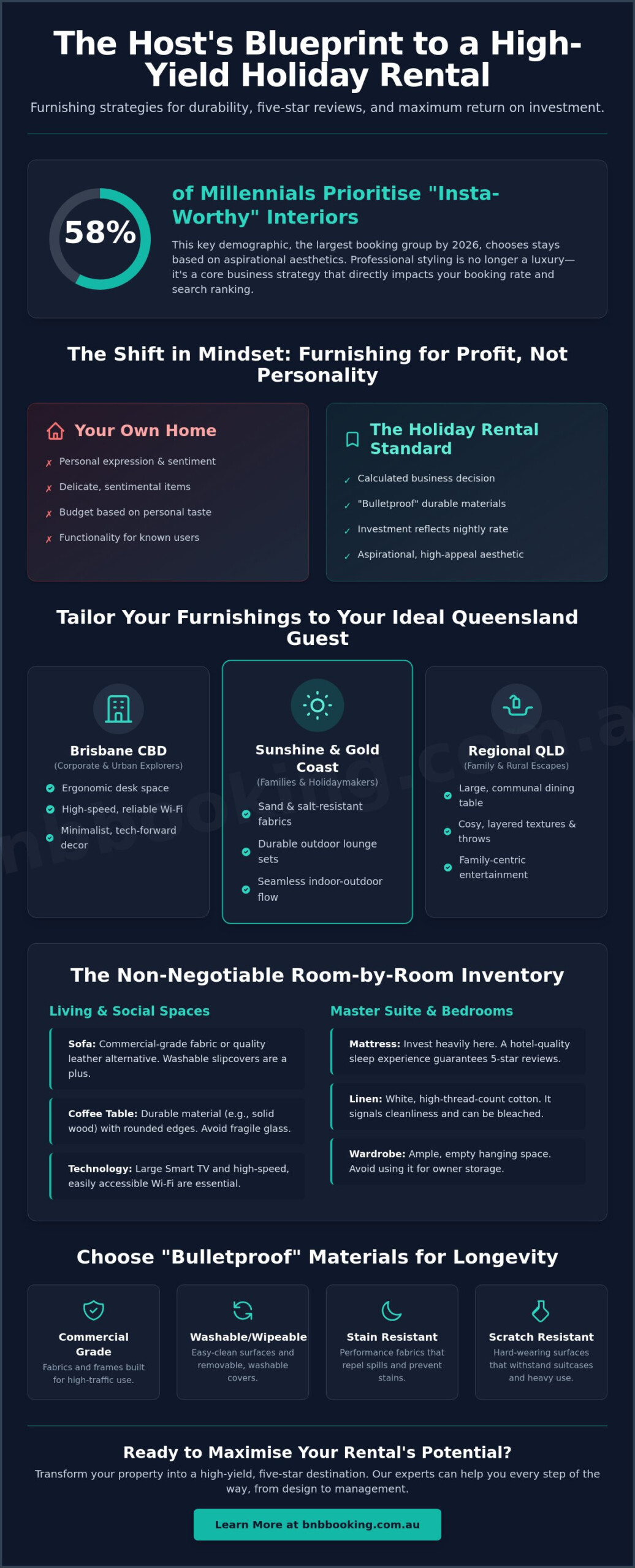
Did you know that 58% of millennials, the largest booking group in 2026, say that an “Insta-worthy” interior is a primary factor when choosing their next stay? It is a startling figure that places immense pressure on hosts to deliver high-end aesthetics while managing the very real fear of guest damage and rising setup costs. You likely want a property that looks like a curated coastal sanctuary but functions with the durability of a commercial space. We understand that balancing a sophisticated “Modern Hamptons” vibe with practical, hard-wearing furniture is a significant challenge. This article will show you exactly how to furnish a holiday rental to achieve that perfect middle ground between aspirational luxury and long-term longevity.
By following our professional, room-by-room template, you’ll master the art of creating a high-yield space that earns five-star reviews for both comfort and amenities. We’ll provide a definitive shopping list of essentials, from commercial-grade fabrics to the “invisible” smart technology that modern guests now expect. From the initial mood board to the final cushion placement, this guide ensures your investment is protected and your booking calendar remains consistently full.
Furnishing your own home is usually an emotional exercise in personal expression. Setting up a property for the short-term market is a calculated business decision. When you are developing a vacation rental strategy, you must pivot from “what do I like?” to “what will a guest pay a premium for?” This is the essence of the Holiday Rental Standard. It involves creating a space that feels curated and intimate while remaining objectively durable and high-performing. Guests don’t book a stay to replicate their daily lives; they book for an “aspirational stay” where every detail is a slight upgrade from their own reality.
Your budget should be a direct reflection of your projected nightly rate. If you’re aiming for a high-yield property in a competitive market, your upfront investment in quality must mirror that ambition. A well-considered plan for how to furnish a holiday rental ensures you aren’t just buying furniture, but rather investing in an asset that generates consistent returns. This strategic approach separates the hobbyist hosts from the high-performing management experts.
Professional styling isn’t just about looking pretty. It’s a strategic lever for your Airbnb search ranking. Platforms prioritise listings with high click-through rates, and nothing drives clicks like a perfectly composed hero image. Research from May 2026 shows that 58% of millennials, the largest booking demographic, consider “Instagrammable” interiors a major factor in their decision. While it’s tempting to save money on budget flat-pack items, “cheap” furniture often costs more over time. The replacement cycles for low-quality pieces in high-traffic rentals are brutal. Investing in commercial-grade durability protects your bottom line and maintains your five-star reputation.
Understanding how to furnish a holiday rental requires a deep dive into your specific location’s demographic. Every region has a unique “ideal guest” with specific needs:
By tailoring your inventory to these profiles, you ensure your property isn’t just another listing, but a targeted solution for your guest’s specific travel needs.
Success in the short-stay market is built on the details. Understanding how to furnish a holiday rental requires a room-by-room inventory that prioritises guest utility over personal preference. While your own home might feature delicate heirlooms or sentimental pieces, a rental demands a template that balances aesthetic appeal with high-frequency use. Every item must serve a purpose, contributing to a seamless experience that justifies your nightly rate.
Sofas are the workhorses of your social areas. Select commercial-grade fabrics or high-quality leather alternatives that can be easily wiped down or professionally cleaned. Washable slipcovers are a savvy choice for coastal properties, allowing you to refresh the look without a full replacement. When choosing coffee tables, avoid sharp edges or fragile glass tops. They represent a safety hazard for families and are prone to unsightly chips. In 2026, a large Smart TV and high-speed Wi-Fi aren’t just perks; they are non-negotiable requirements for every guest from corporate travellers to holidaying families.
The mattress is where you should spend a significant portion of your budget. A hotel-quality sleep experience is the foundation of almost every five-star review. Pair a supportive mattress with white, high-thread-count cotton linen. White remains the industry gold standard because it can be bleached and signals a high level of hygiene to the guest. Don’t clutter wardrobes with spare pillows or owner storage. Provide ample empty hanging space and sturdy luggage racks. Guests appreciate being able to unpack immediately and feel organised during their stay.
Guests expect a seamless self-catering experience that rivals their own home setup. A Nespresso machine is now considered an essential part of the modern “Coffee Station” rather than a luxury. When stocking your cupboards, follow the 2x rule: provide double the amount of dinner sets, cutlery, and glassware relative to your maximum guest capacity. This prevents the kitchen from feeling sparse and reduces the frequency of dishwasher runs. Ensure all core appliances, including a reliable toaster, kettle, microwave, and dishwasher, are modern and easy to operate without a manual.
If the logistics of sourcing and maintaining these items feel daunting, partnering with full-service Airbnb management experts can help standardise your offering for maximum return.
High-performing rentals aren’t just designed to look good in photos; they’re engineered to withstand the rigours of back-to-back bookings. From a professional property management perspective, the greatest threat to your ROI isn’t a lack of bookings, but the high cost of constant maintenance and furniture replacement. When considering how to furnish a holiday rental, you must apply the “Commercial Use” test. Every piece must be capable of surviving heavy use, occasional spills, and the general wear-and-tear that comes with high guest turnover. This strategic approach ensures your property remains in peak condition without requiring a full refurbishment every season.
Choosing the right fabric is a critical decision for your lounge and dining chairs. Polyester blends and solution-dyed acrylics have become host favourites because they offer the softness of natural fibres with the resilience of synthetic materials. These fabrics are inherently more resistant to fading and pilling, making them ideal for sun-drenched Queensland living rooms. While genuine leather is often associated with luxury, it can be problematic in the humid Brisbane or Gold Coast climate, where it may feel sticky or require intensive conditioning to prevent cracking. High-quality leather alternatives or “performance” fabrics often provide a better balance of tactile comfort and ease. Always ensure every upholstered item undergoes professional stain-guarding before your first guest arrives. This simple step creates a microscopic barrier that prevents minor spills from becoming permanent, costly stains.
Surface selection can make or break your cleaning schedule and your damage deposit disputes. While natural marble is aesthetically stunning, it’s incredibly porous and prone to “ring marks” from wine glasses or acidic spills. Engineered stone or high-pressure laminates are far superior for holiday rentals, offering a similar aspirational look with almost zero maintenance. For properties near the coast, salt air is a silent killer of furniture. Opt for powder-coated metals and treated timbers to ensure longevity against corrosion and rot. These materials are built to last in harsh environments, protecting your investment for years.
Finally, consider the repairability of your choices. A solid timber table can be sanded and refinished if a guest scratches it, whereas a cheap veneer item often requires a total replacement after a single mishap. When learning how to furnish a holiday rental, prioritise items that can be restored rather than replaced. This mindset extends to your decor as well. Avoid fragile trinkets and “dust-collectors” that increase cleaning times and are easily broken. A minimalist approach with fewer, higher-quality pieces is always more profitable and easier to maintain in the long run.
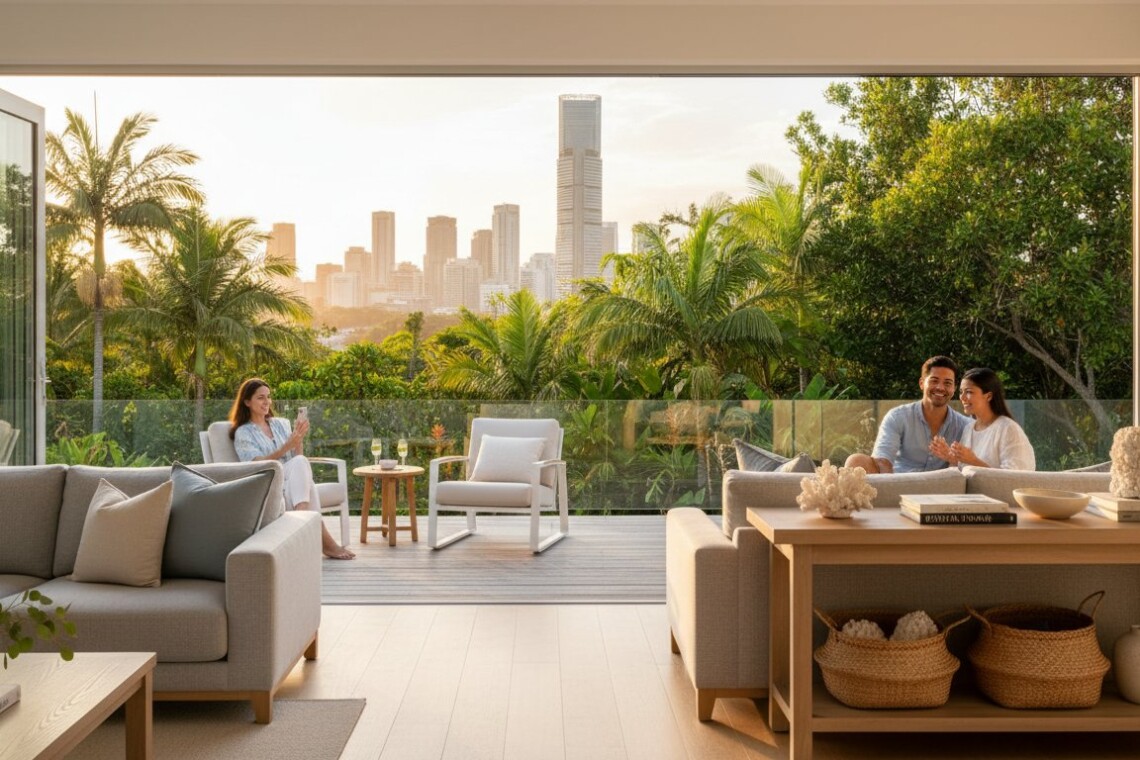
In Queensland, the “great outdoors” is more than a marketing slogan; it is a fundamental part of the floor plan. Guests visiting Brisbane, the Gold Coast, or the Sunshine Coast expect a seamless transition between the lounge and the balcony. Mastering how to furnish a holiday rental in the Sunshine State requires a specific focus on this alfresco lifestyle. If your outdoor area consists only of a lonely plastic table and two chairs, you are missing a significant opportunity to increase your nightly rate. Treat your deck or patio as a second lounge, complete with comfortable seating and thoughtful lighting that encourages guests to linger long after the sun goes down.
Durability takes on a different meaning in the sub-tropics. Intense UV rays and sudden summer storms will quickly destroy interior-grade furniture placed outside. Invest in weatherproof dining sets and UV-resistant cushions that won’t fade after one season. In Australia, a clean, high-quality BBQ is often the highest-rated amenity on a listing. Providing a well-maintained Weber or similar premium grill is a strategic move that frequently appears in five-star reviews. To elevate the evening “vibe”, integrate solar path lights and festoon lighting. These small additions create an inviting atmosphere that looks spectacular in professional photography, driving higher click-through rates.
The Brisbane sun is relentless. While natural light is a selling point, you must provide guests with the tools to manage it. Blockout curtains are essential in bedrooms to ensure a hotel-quality sleep, while sheer curtains in living areas allow for privacy without sacrificing the view. When considering how to furnish a holiday rental, don’t overlook the humble ceiling fan. Fans are far more cost-effective than running air conditioning 24/7 and are often preferred by guests who want a gentle breeze rather than a refrigerated chill. Arrange your furniture to encourage cross-ventilation, ensuring that the indoor-outdoor flow remains functional and refreshing.
Navigating these regional nuances is what separates a standard listing from a high-performing asset. For hosts who want to ensure their property is perfectly tailored to the local market, our full-service Airbnb management offers the strategic oversight needed to maximise every square metre of your investment.
Once the heavy lifting of sourcing furniture is complete, the focus shifts to the sensory layer that defines a guest’s first impression. Mastering how to furnish a holiday rental involves more than just selecting a durable sofa; it requires curating an experience from the moment the key turns in the lock. This final stage is where you transition from being a property owner to a hospitality provider, ensuring that the “aspirational stay” promised in your photos is matched by the reality of the arrival. Every detail should reinforce the feeling of a polished, high-performing retreat.
A well-curated welcome pack is a low-cost, high-impact way to secure early five-star reviews. Focus on local Brisbane flavours and essential items that save guests a trip to the supermarket immediately after arrival. A professional starter kit should include high-quality tea, coffee pods, fresh milk, and basic pantry staples like premium olive oil and sea salt. Elevate the experience by sharing your local expertise through a custom guidebook that anticipates every guest question and streamlines your Airbnb guest communication Brisbane hosts rely on. Highlighting your favourite hidden gems in West End or the best brunch spots in New Farm adds a personal touch that larger hotels simply cannot replicate. Small luxuries, such as boutique hand wash and locally made soaps, signal a level of care that resonates deeply with modern travellers.
Your furnishing journey is not finished until it has been captured by a professional lens. Staging for a listing is fundamentally different from staging for daily life. The “less is more” rule is paramount here. Declutter every surface, remove unsightly power cords, and ensure that every cushion is perfectly plumped. Identify your property’s “Hero Shot”, whether it is a sun-drenched balcony overlooking the Brisbane River or a sleek, minimalist kitchen, and style it to be the centrepiece of your gallery. Professional photography is the final, essential step in learning how to furnish a holiday rental, as it translates your physical investment into digital bookings.
Organising the final setup and ongoing maintenance of a short-term rental can be an overwhelming task for individual owners. This is where a professional partnership becomes invaluable. We assist owners with listing optimisation to ensure that every design choice you’ve made is highlighted to the right audience. Our network includes professional stylists and trusted furniture suppliers who understand the specific demands of the Queensland market. If you are ready to transform your property into a high-performing asset, contact our Brisbane team for a comprehensive property appraisal. We handle the clinical efficiency of management so you can enjoy the financial rewards of a premium holiday rental.
Mastering the nuances of how to furnish a holiday rental is a strategic investment that pays dividends through higher occupancy and five-star reviews. By prioritising commercial-grade durability and the specific “Coastal Luxe” aesthetic that Queensland guests crave, you create a space that is as resilient as it is beautiful. Your furniture choices and final staging touches are the silent ambassadors of your brand. They speak to the quality of the experience before a guest even arrives.
Transitioning from a standard house to a high-performing short-term rental requires a meticulous eye for detail and a deep understanding of the local market. We are specialists in the Brisbane and South East Queensland region, offering full-service management that encompasses everything from professional styling to high-end photography. Our team possesses the expertise required to manage luxury and family-friendly holiday homes with clinical efficiency and a personal touch. If you are ready to maximise your return and secure your property’s future, Get a Professional Appraisal for Your Brisbane Property. Your journey toward a stress-free, profitable investment starts with an expert partnership.
Costs vary significantly based on the property size and the level of luxury you intend to provide. As of early 2026, a basic furniture setup for a one-bedroom apartment in Australia starts from approximately $6,200 plus GST. For hosts seeking a professional, high-end finish that stands out in a competitive market, a comprehensive package for a one-bedroom rental typically starts around $15,999 excluding GST.
Investing in high-quality, commercial-grade pieces is far more cost-effective over the long term than buying budget furniture. Cheap items often fail the “Commercial Use” test and require frequent replacement due to heavy guest turnover. Choosing durable materials reduces your maintenance overheads and ensures your property maintains a premium feel that earns consistent five-star reviews.
Brisbane guests prioritising urban stays look for high-speed Wi-Fi, effective climate control, and a seamless self-catering experience. A high-quality Nespresso machine and a well-maintained BBQ on the balcony are often the most praised amenities in local reviews. Providing these essentials helps you understand how to furnish a holiday rental that meets the specific demands of the South East Queensland market.
You should avoid including personal items or family photos to allow guests to feel the property is their own private sanctuary. The goal of a holiday rental is to provide an “aspirational stay” that feels curated rather than lived-in. Removing personal clutter makes the space feel professional and ensures your listing photos look clean and inviting to a global audience.
Professional stain-guarding and the use of performance fabrics are the best ways to protect your investment. Apply a high-quality fabric protector to all upholstered items before your first booking to create a barrier against spills. Choosing materials like solid timber or engineered stone also makes it easier to repair minor scratches or wipe away marks without needing a full replacement of the item.
A “Modern Hamptons” or “Coastal Luxe” palette featuring light, airy tones and earthy neutrals is the most popular choice for Queensland rentals. Use a base of soft whites and beiges with accents of sage green or muted blues to create a calming atmosphere. This aesthetic resonates with the Sunshine State’s focus on indoor-outdoor living and looks exceptional in professional listing photography.
Providing a dedicated workspace is highly recommended, especially for properties in the Brisbane CBD or near major corporate hubs. Many modern travellers mix business with leisure and require a comfortable chair and a sturdy desk with accessible power points. Even a small, stylish nook can significantly increase your appeal to the lucrative corporate booking demographic and digital nomads.
Most high-performing hosts refresh their soft furnishings every two to three years and review major furniture pieces every five years. Regular updates to cushions, linens, and decor items keep your property looking fresh and “Insta-worthy” in a shifting market. Knowing how to furnish a holiday rental also involves identifying when a piece no longer meets the professional standard required for top-tier nightly rates.